Valentina Teglas
Conceptual artist
Independent creative professional specialising in conceptual contemporary art, editorial illustration and printmaking, where traditional craftsmanship meets innovation.
Represented by C.atWork Agency
Mentored by curator Giulia Colletti for Contemporary Art.
Mentored and represented by Helen Biles Studio for Illustration.
Editorial Illustration

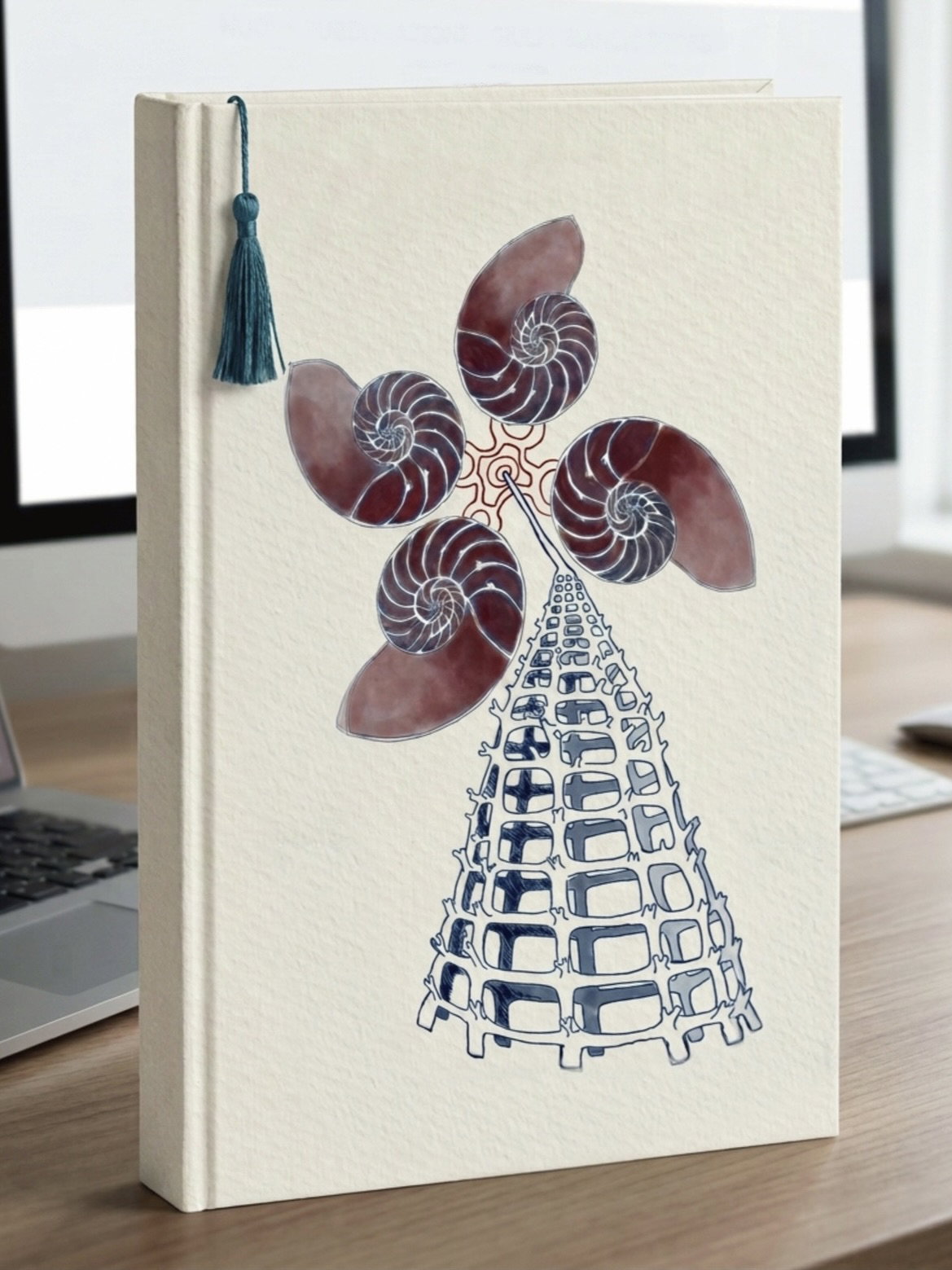
Book Cover Design
Contemporary Art & Printmaking
Spanning watercolor, acrylic, linocut, drypoint, monotype, and cyanotype photography. Each piece pushes boundaries through experimental technique and conceptual innovation.
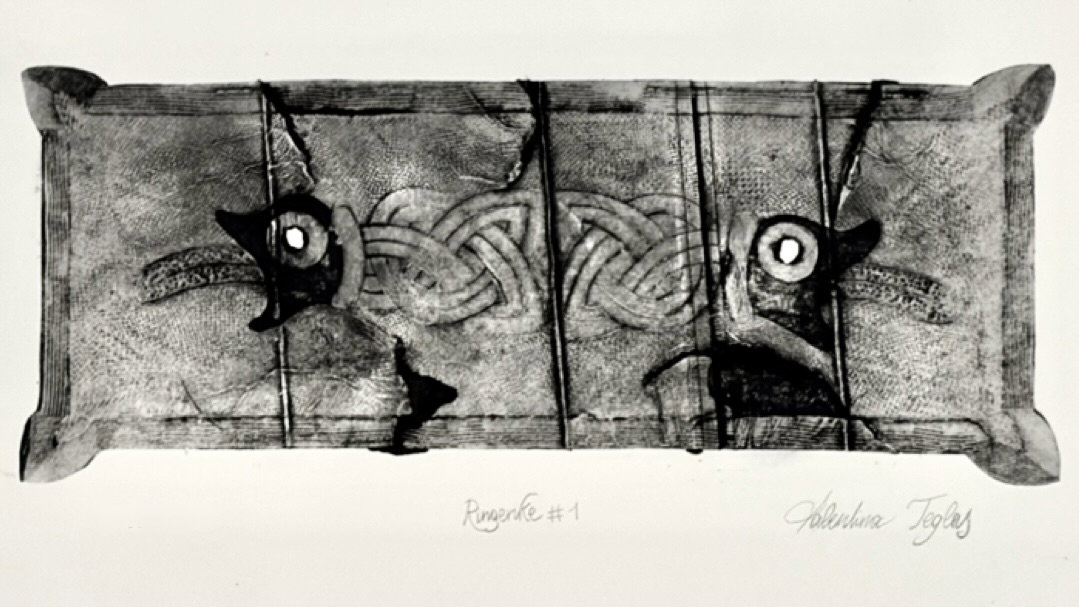
Concept and craft
Where concept and contemporary art meet the same dedication, in every medium.
Unflinching editorial illustrations

Experimental mixed media
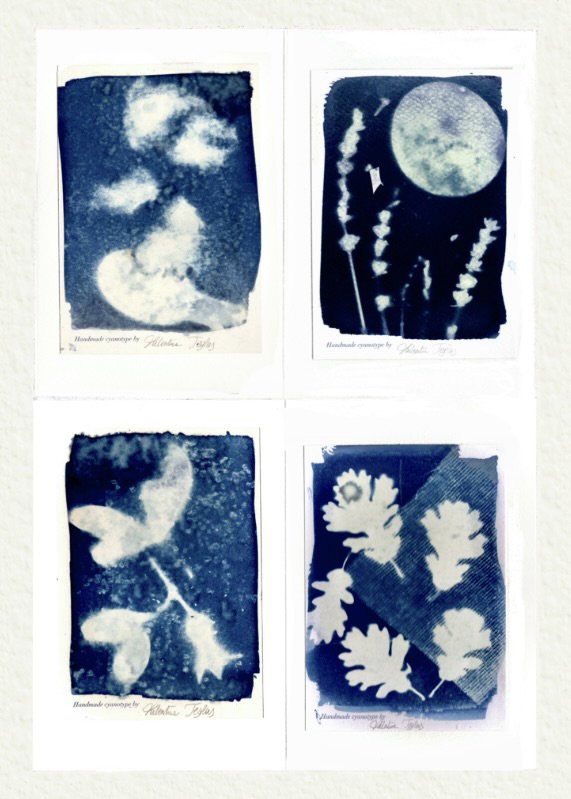
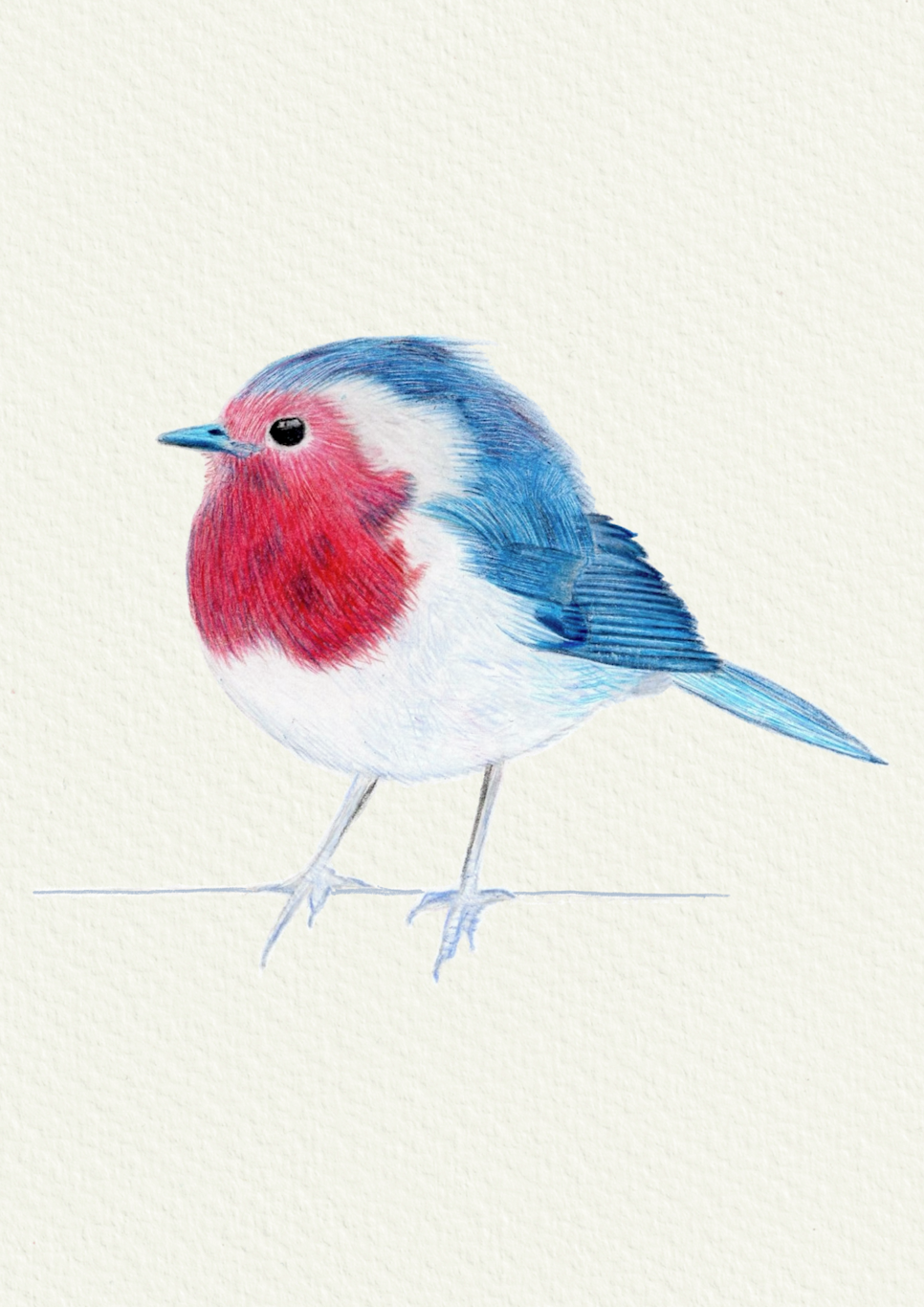

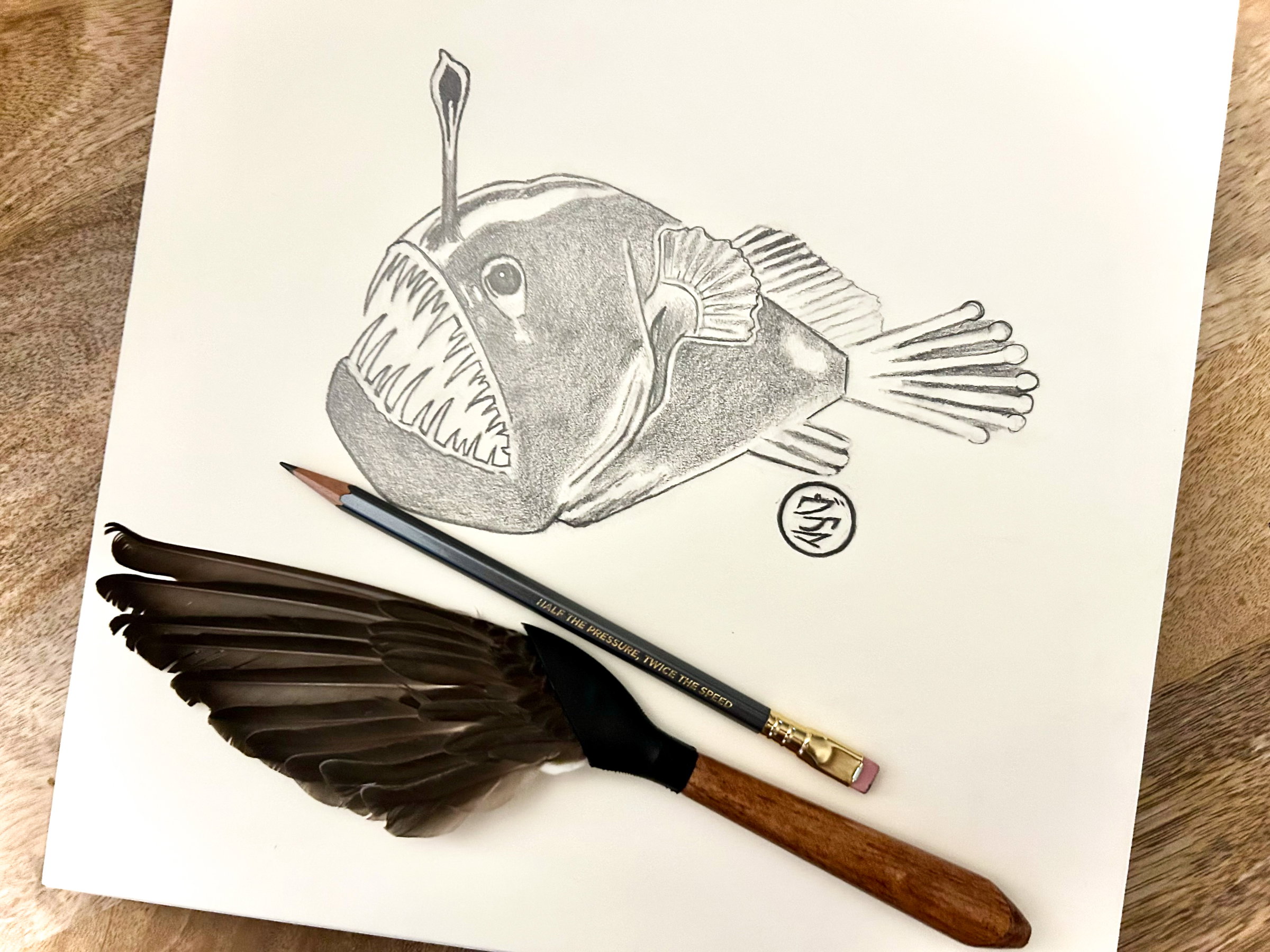

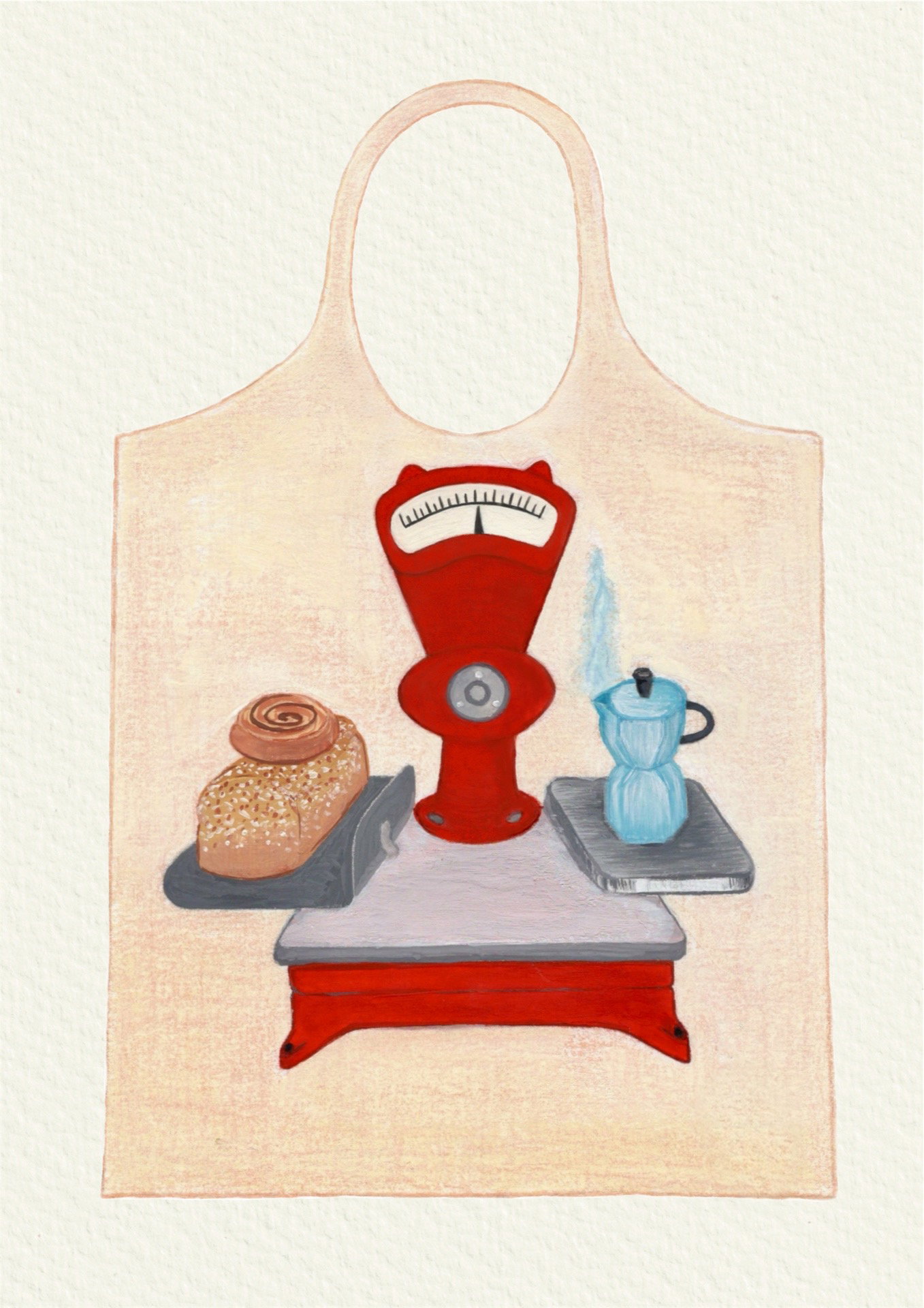

Where Tradition Meets Radical Vision
Experimentation
Technique
Conceptual
Handcrafted
Editorial
Mediums
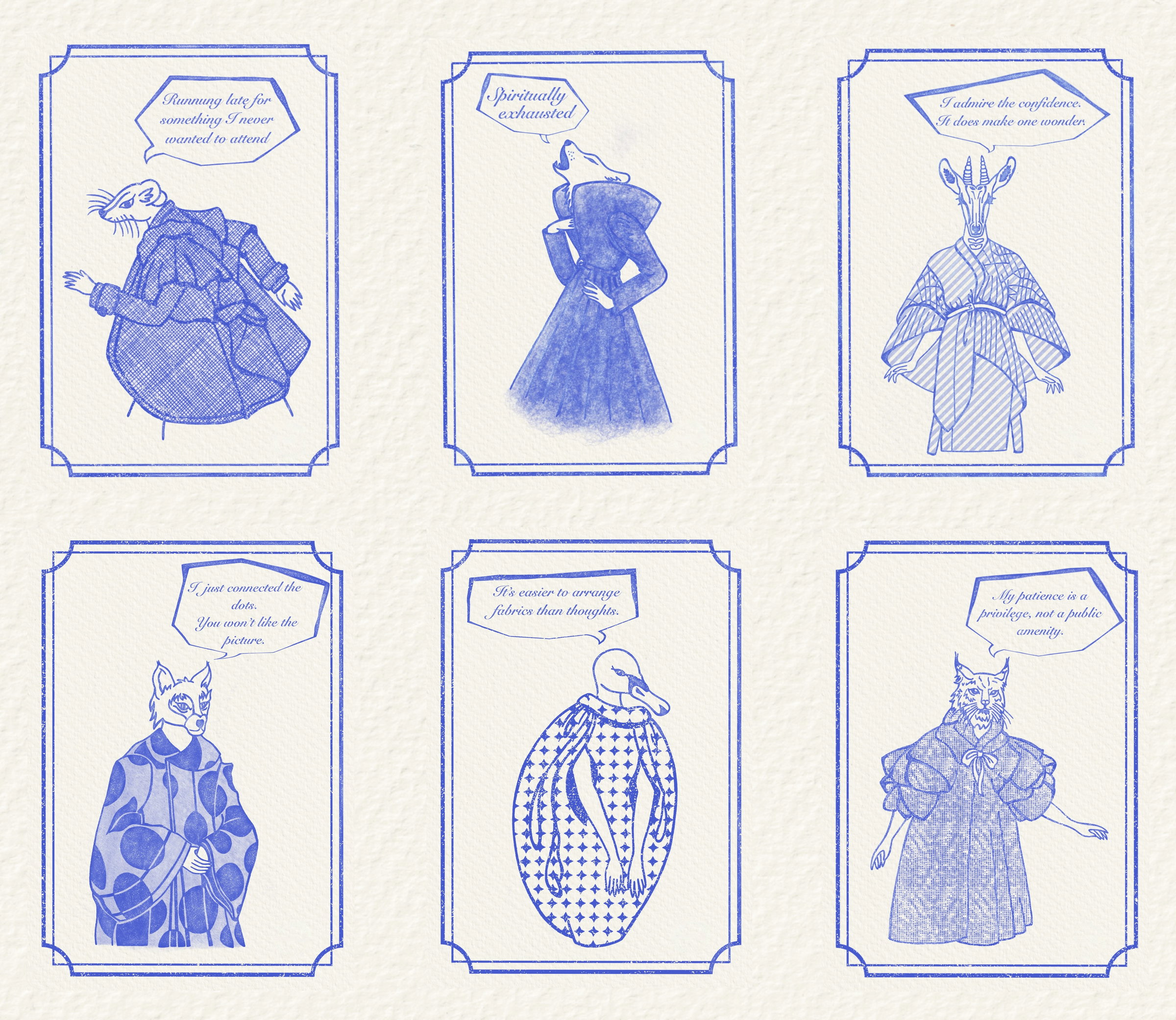
Unsolicited Opinions
The series centres on the right to say what we learn to hold back in order to be accepted.
These are the thoughts coexistence asks us to soften or silence, stated without apology. More than a mere provocation, the series carries the same legitimacy as the thoughts we are willing to hear. An opinion is “unsolicited” when the person receiving it would have preferred not to hear it. It is precisely where the truth begins.
The choice of animals answers this premise, as they do not calculate the social costs of what it perceives, inhabiting a perception that precedes self-censorship. This is why every figure has an animal head on a dressed body, in a deliberate split. The body wears the language of acceptability while the head, the seat of gaze and voice, belongs to ancestral instinct. The garments are the codified repertoire of appearance, the way the body arranges itself as desirable and accepted. The vignette has historically been the place of permitted transgression, as satire paves the right to say the uncomfortable things under the protection of the drawing. A final irony lies in the craft. The printed blue, ornate frames, the patina of a collectible card give Unsolicited Opinions the dignity of an engraved, almost official message while making it impossible to dismiss the line as a mere outburst then forcing the thought to be taken seriously.
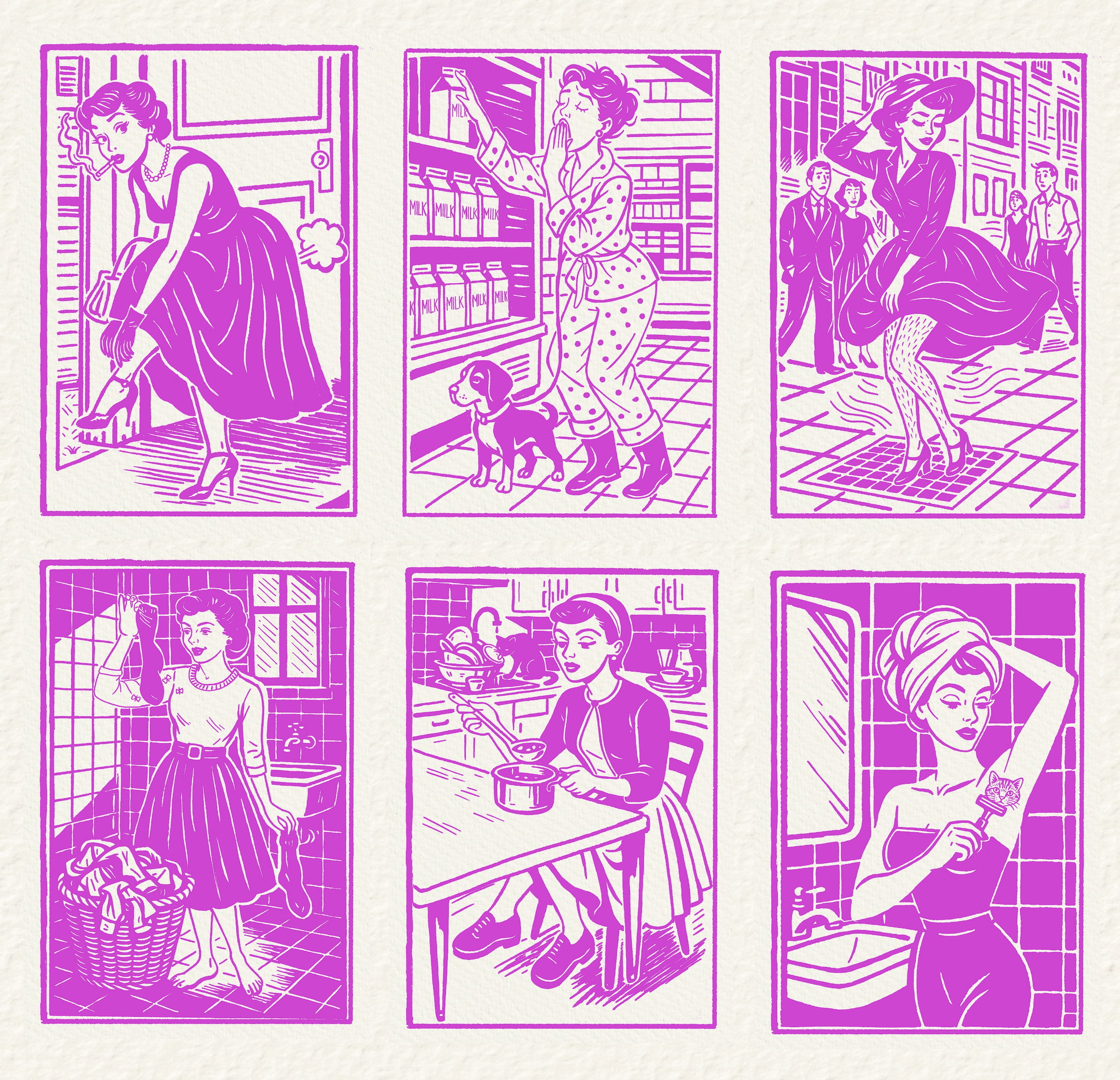
Social Glitch
This digital linocut series examines the historical construction of femininity as a disciplined and repetitive daily performance. Through a visual language that recalls the advertising and illustrative aesthetics of the 1950s and 1960s, the work stages a series of seemingly mundane contemporary domestic and bodily gestures, including shaving, eating directly from the pot, or shopping in pyjamas.
These scenes expose the persistence of internalised social norms that have required women to conceal or negotiate bodily functions and signs such as hair growth, flatulence, appetite, or exhaustion. By combining irony and anachronism, the series reveals how the domestic sphere continues to operate as a space where gendered expectations are rehearsed.
The use of vivid magenta monochrome produces an ambiguous effect. On one hand, it evokes the seductive and pop-inflected tone of commercial culture. On the other hand, it transforms the scenes into something almost toxic.
The Toys Chronicles
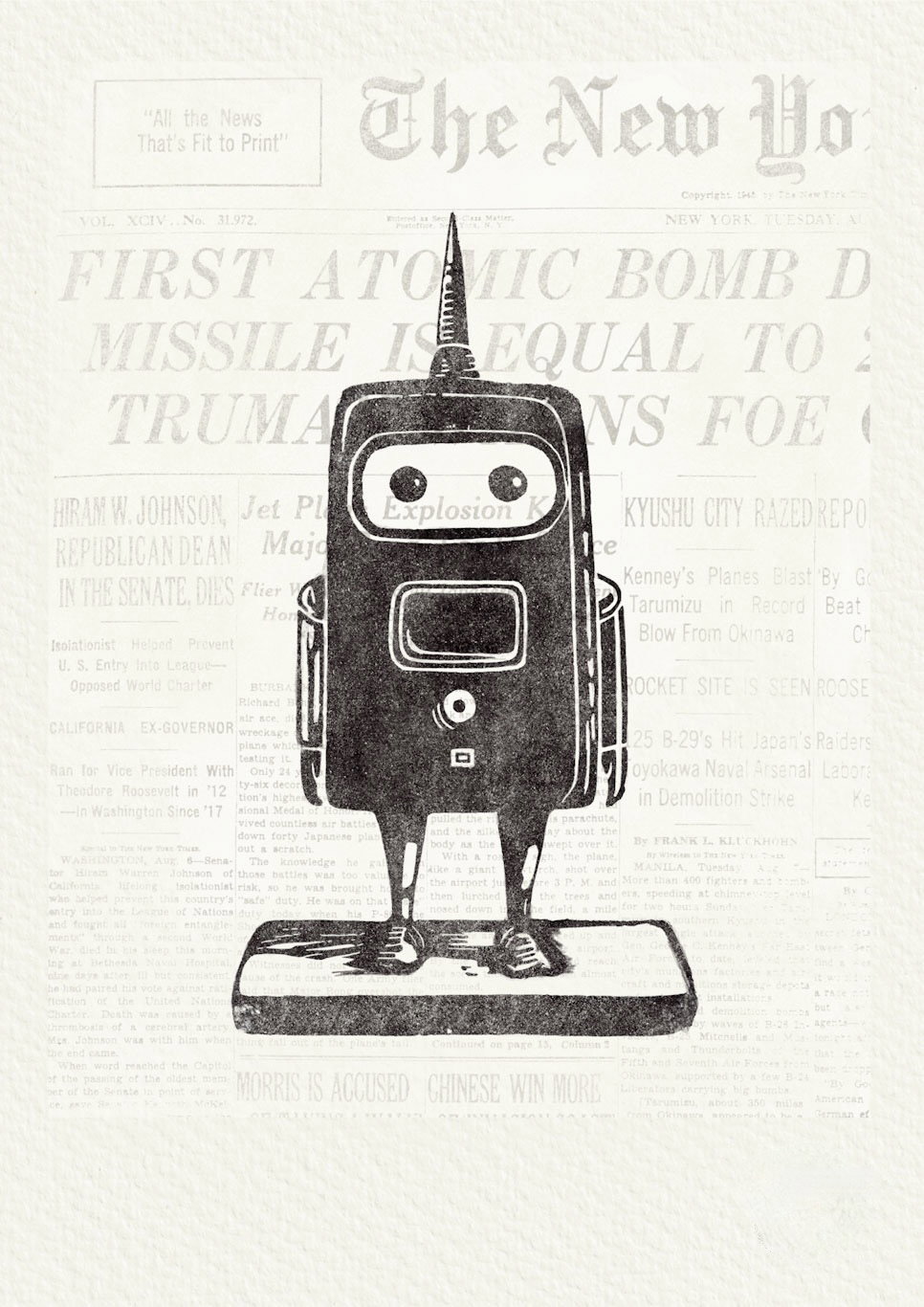
Linocut prints of vintage toys layered onto the front pages of newspapers that reported the defining events of the twentieth century. A toy is the most intimate archive of a generation's imagination, yet it is produced within a historical moment whose violence it silently absorbs. The innocence of the object and the weight of history occupy the same surface, the same paper, and neither cancels the oher.
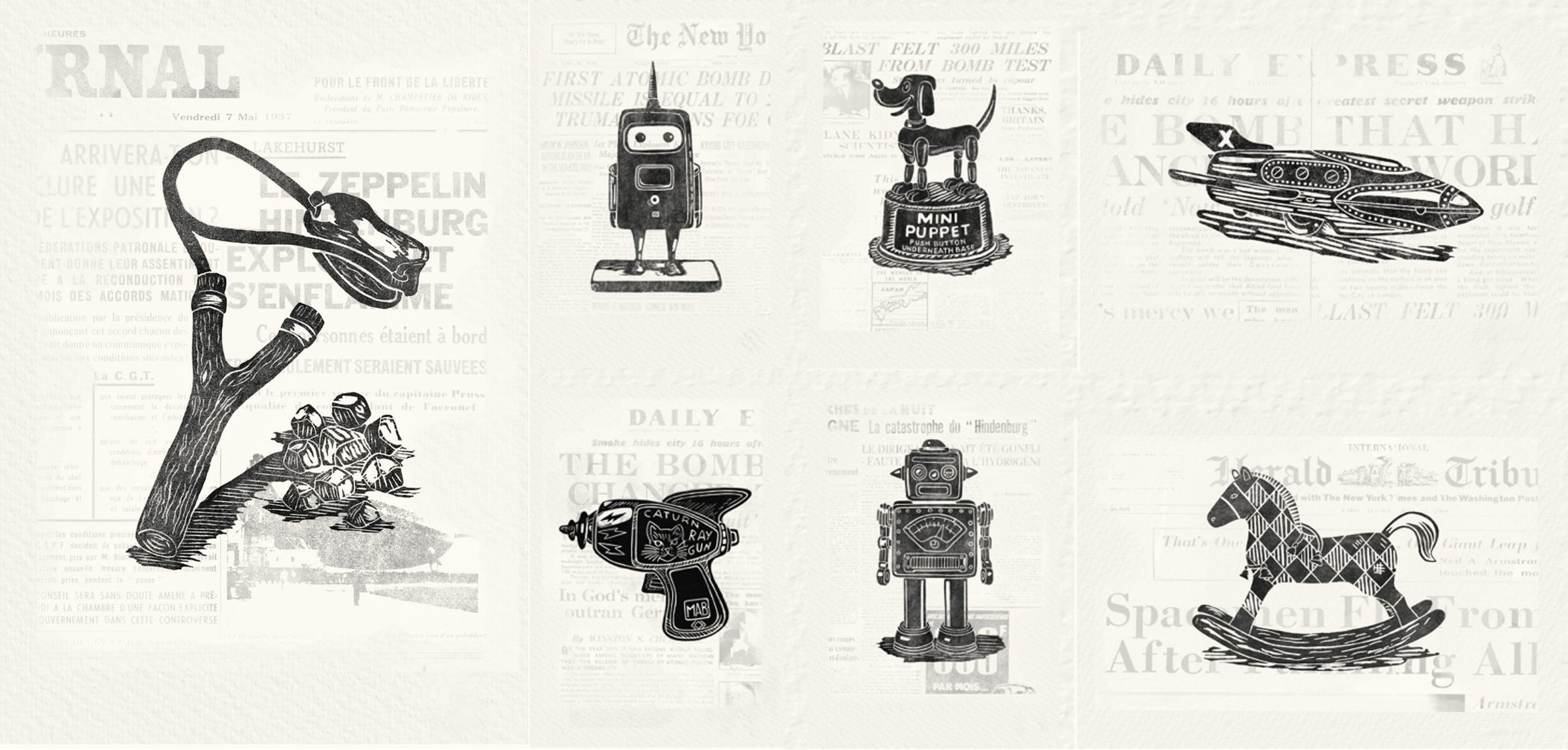
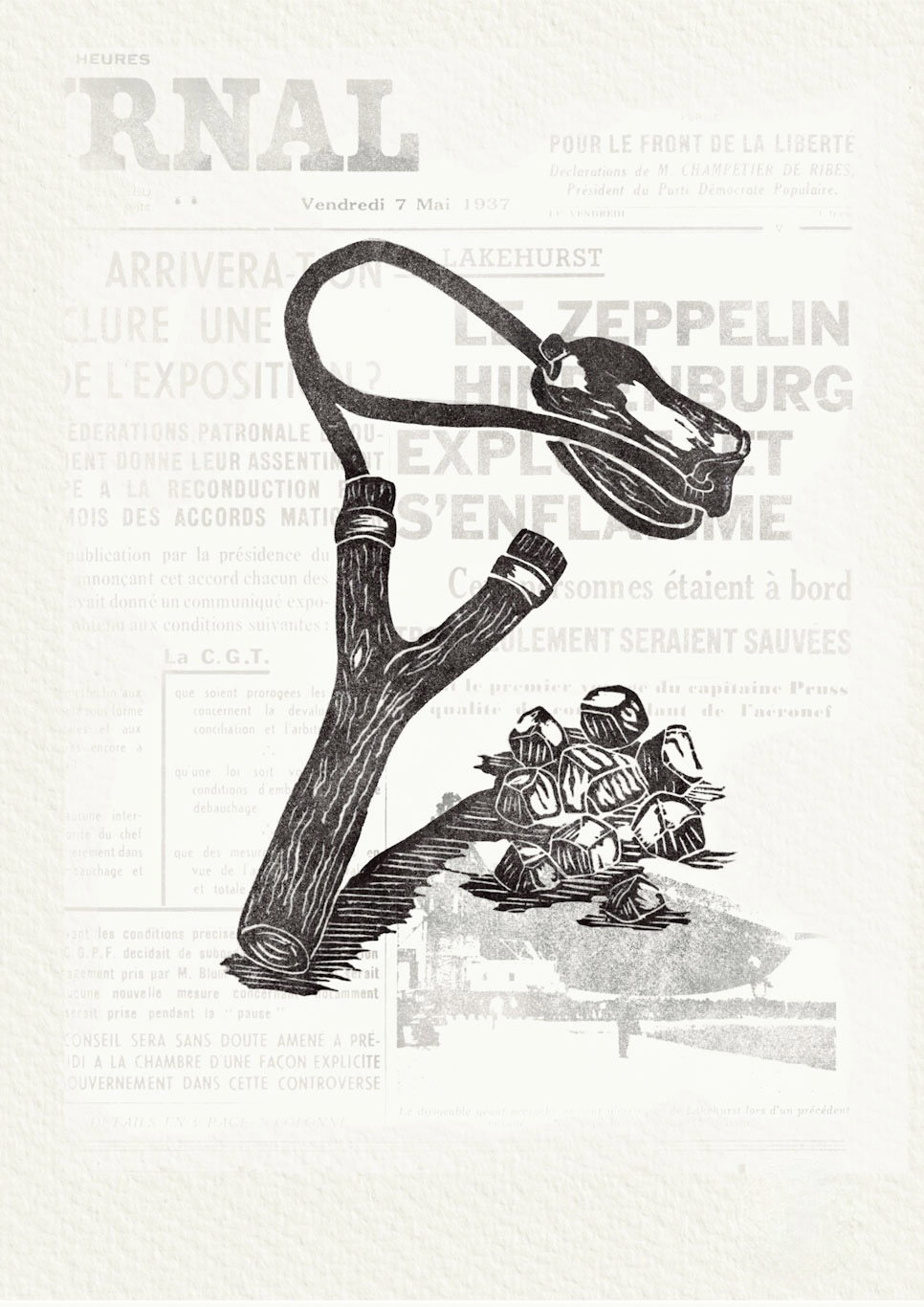
The Giant Slayer
The Giant Slayer, from the series The Toys Chronicles. Hand-carved linocut, hand-printed with baren on Hahnemühle paper, Charbonnel ink (Lefranc & Bourgeois). A slingshot — a classic toy of a now-distant twentieth-century childhood — against the front page reporting the explosion of the Hindenburg at Lakehurst, Friday 7 May 1937. A piece of dark humour: the toy is credited with bringing down the airship, reducing one of the century's defining aeronautical catastrophes to the trajectory of a pebble.
The Hindenburg was not generically "German": it was the flagship of the Reich. Two enormous swastikas painted on its tail fins, red on white, visible from kilometres away. Named after Paul von Hindenburg, the president who in 1933 handed Hitler the chancellery, it flew as the aerial ambassador of Nazi Germany over New York, Rio, the Mediterranean. In 1936 it had crossed the sky above Berlin during the opening ceremony of the Olympic Games — the same Olympics the regime had built as a planetary showcase of Aryan supremacy. It was propaganda in flight.
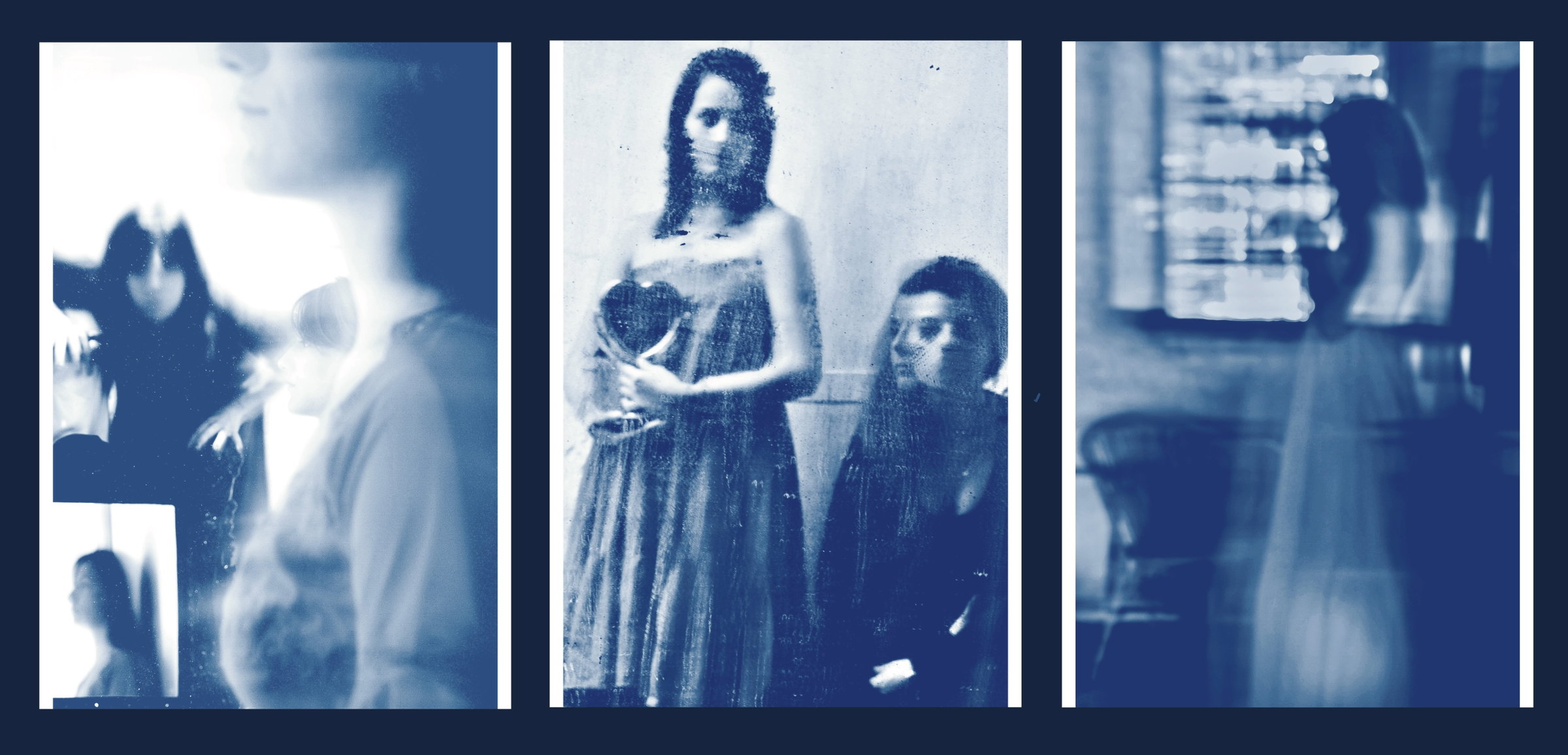
Id-entities
These female figures emerge through an unfinished process of revelation shaped by the long exposure times of photographic technique. The blurred forms produced evoke selves continuously exposed to systems of registration and classification, while resisting the fixity those systems demand.
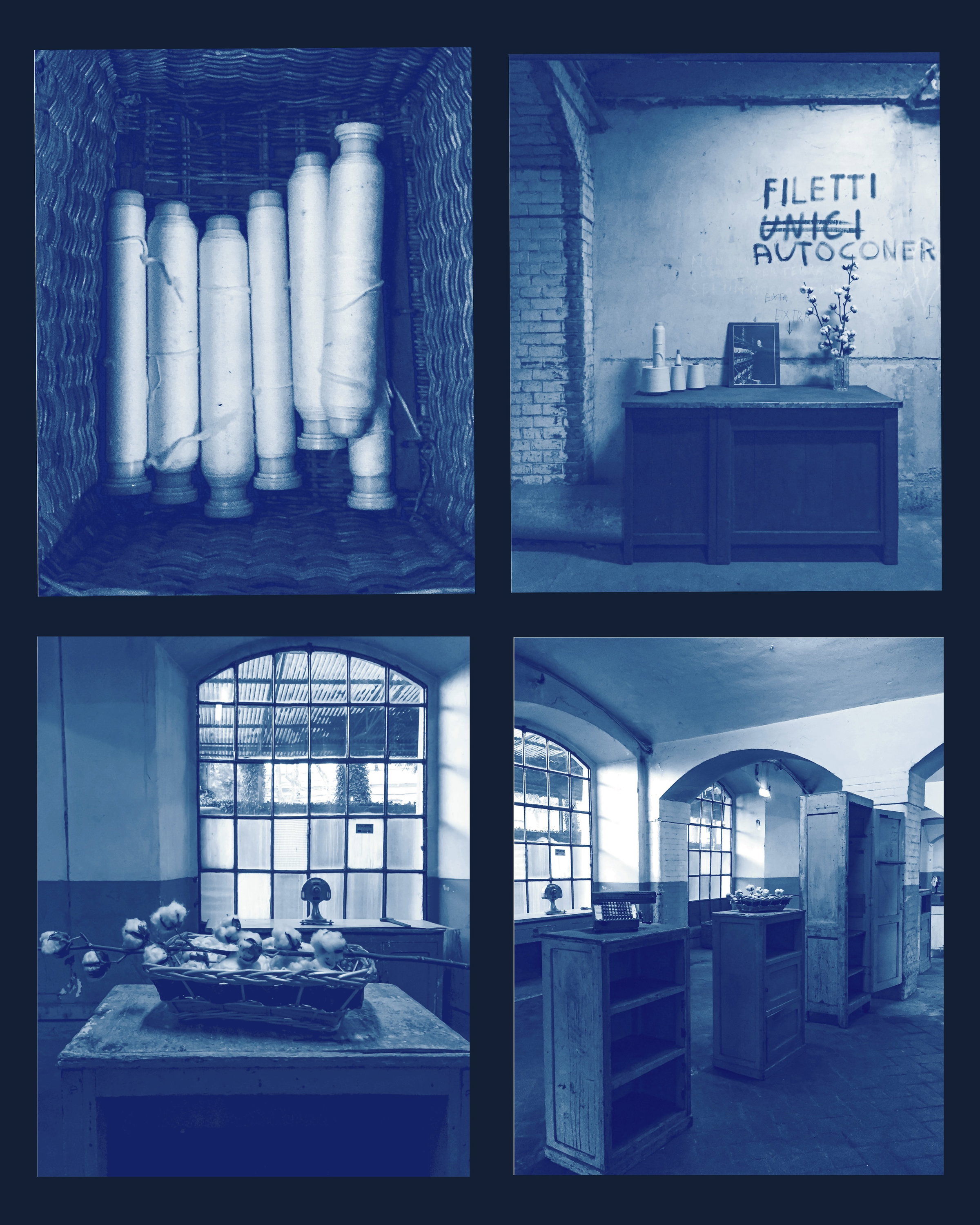
Latent
Shot inside a former spinning mill, this photographic series carries lingering presences encrusted within objects, like still lifes of feminine labour and its hidden consequences that were never fully addressed. The seemingly empty rooms preserve the emotional residue of what once inhabited them. Absence here acquires density. The visible world seems to hold its breath.Le illustrazioni editoriali sono capolavori di precisione e creatività. Lavora con una professionalità rara, trasformando briefing complessi in narrazioni visive magnetiche e indimenticabili.
Let's create something extraordinary together
Direct Email
Response Times
Project Consultation
Explore Contemporary Conceptual Art
Legal
Valentina Teglas
Where contemporary art meets with analog techniques